
Three years ago, the prophecy was simple: AI would write the code, and we would sip coffee on the beach, occasionally tapping a “Deploy” button. We were promised the death of drudgery.
Instead, we got something far more taxing: the death of “flow.”
If you talk to software engineers today, you won’t hear complaints about syntax errors or missing semicolons. You hear about a specific, crushing kind of exhaustion that didn’t exist a few years ago. We are suffering from Generator Fatigue.
Here is why the tools designed to save us time are quietly destroying our energy.
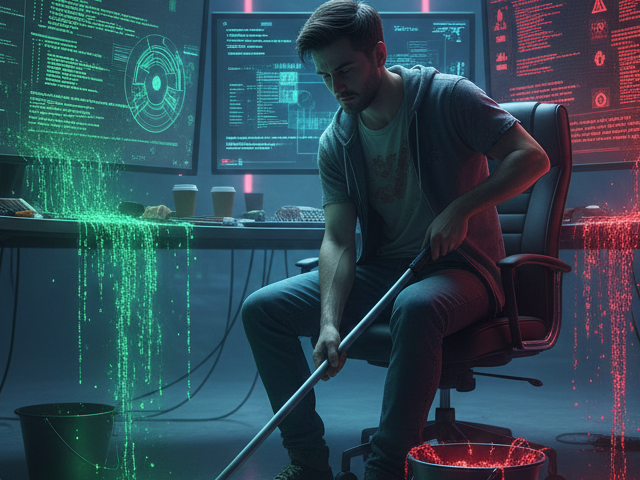
The Shift from Architect to Janitor
The fundamental joy of engineering used to be the act of creation. You faced a blank editor, built a structure in your mind, and laid the bricks one by one. It was hard, but it was your logic.
Today, the workflow has inverted. The AI lays the bricks—thousands of them, instantly. But AI is a sloppy bricklayer. It hallucinates. It introduces subtle security flaws. It uses deprecated libraries with total confidence.
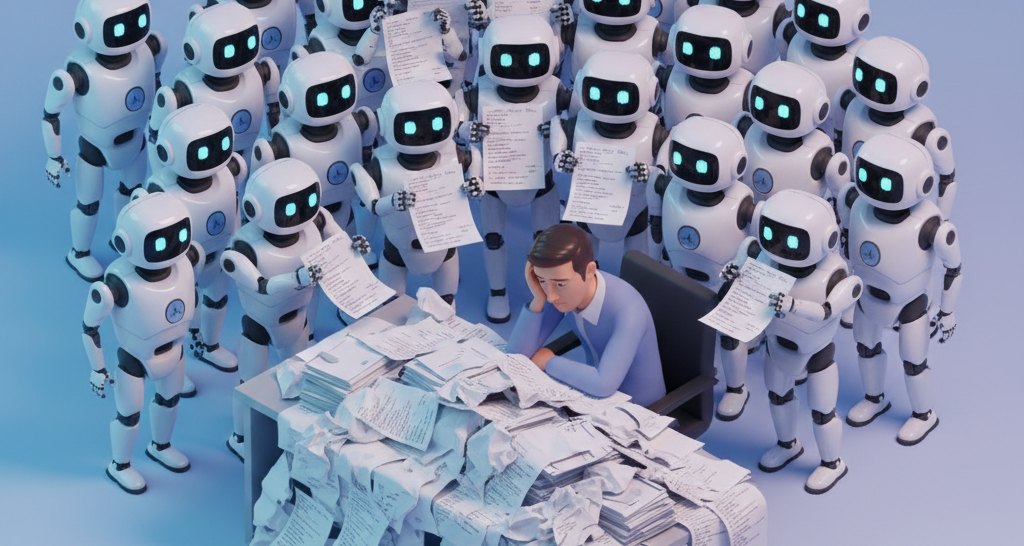
Your job is no longer to build; it is to clean up. We have transitioned from writers to editors, and scientifically, it is much harder to debug code you didn’t write than to write it yourself. We are spending our days squinting at 90% correct code, hunting for the 10% that will break production. The cognitive load of constant suspicion is heavier than the load of creation.
The Context-Switching Nightmare
The speed of AI has created a dangerous illusion for management: “If the AI does the heavy lifting, you can handle five projects at once.”
In 2023, you might have spent a day deeply focused on one complex algorithm. In 2026, you are juggling six different features because the AI “solved” the boilerplate for all of them in minutes.
The problem? The AI doesn’t have a ramp-up time. You do. The human brain requires “context loading”—that 20-minute period of getting your head around a problem. When you are forced to context-switch every hour because the AI is generating output faster than you can think, you enter a state of permanent cognitive fragmentation. We aren’t burning out from work; we are burning out from the friction of switching gears.
The “GPS Effect” on Our Brains
Remember when people stopped remembering phone numbers because their phones did it for them? We are seeing the same atrophy in coding.
Senior engineers are reporting a terrifying sensation: looking at a blank whiteboard and feeling… blank. We have relied on the “Autocomplete” for so long that our mental maps of complex systems are fading. We are like drivers who have used GPS for so long we can no longer navigate our own neighborhoods.
The anxiety of 2026 isn’t “Will AI take my job?” It is “Do I still know how to do my job without it?”
The Way Out: Intentional Friction
So, how do we survive the age of infinite speed? We have to reintroduce friction.
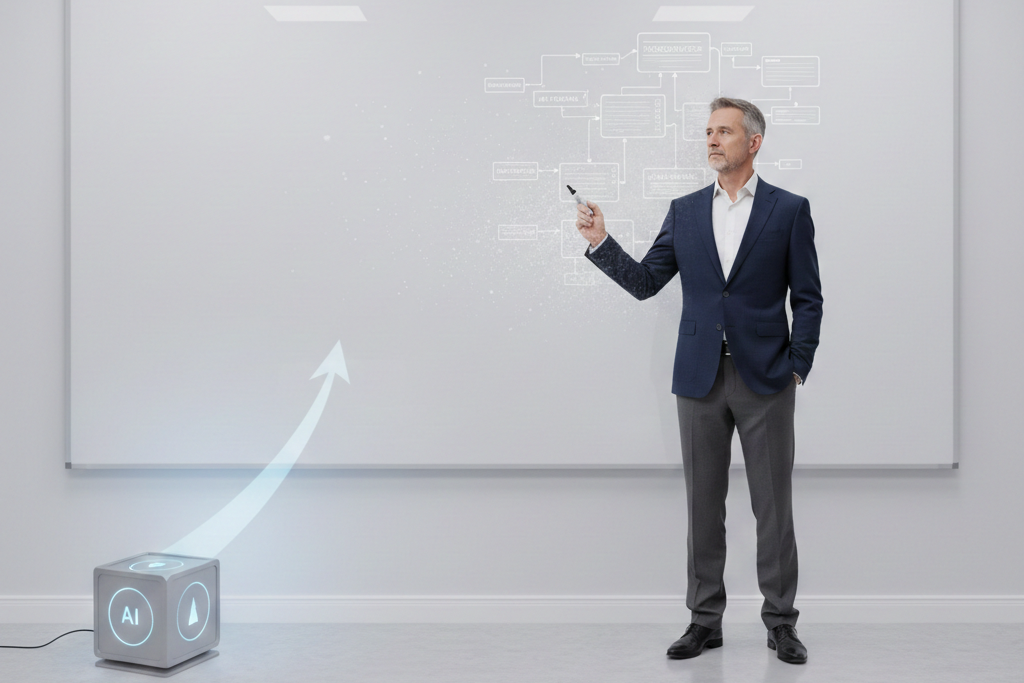
The most productive engineers I know are now doing the unthinkable: they are turning the AI off for the first hour of the day. They are forcing themselves to write the core logic by hand. Not because it’s faster—it’s not—but because it forces the brain to actually understand the system rather than just review it.
We need to stop trying to outpace the machine. The goal of the human engineer in 2026 is no longer volume; it is taste. The machine can provide the quantity. Only you can provide the quality.
How are you managing the cognitive load in 2026? Let’s discuss in the comments.